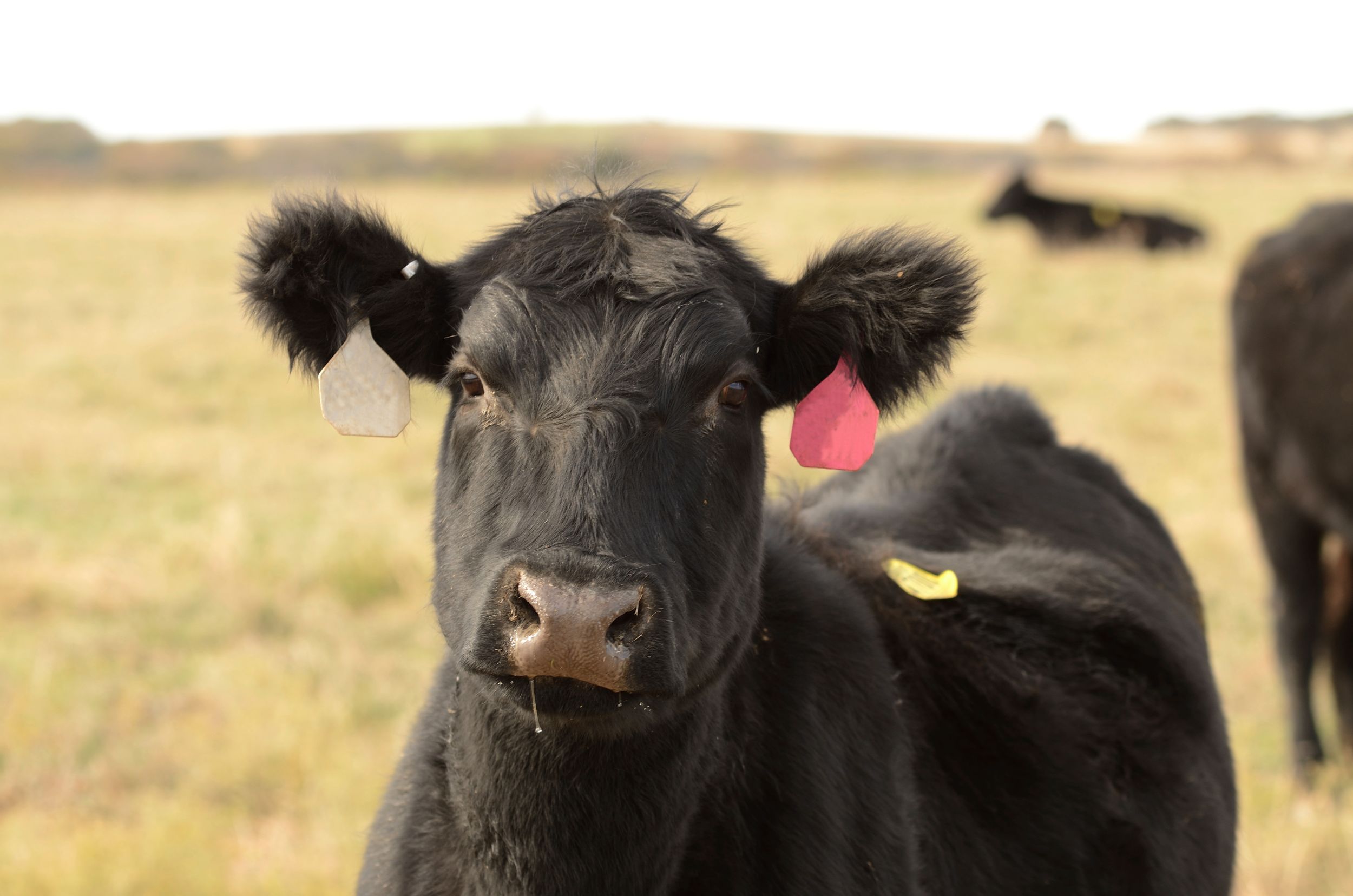
Advanced herd management techniques can reduce a beef farmer’s carbon footprint by 40 percent according to modelling work done by the Stabiliser Cattle Company and reported in a recent edition of Farmers Weekly magazine. Focusing on the experience of Harri Parri, who farms 293 ha (723 acres) at Crugeran, Pwllheli and manages a herd of 200 performance-recorded Stabiliser cattle, the article cites nine critical factors required to optimise herd efficiency.
Harri says the nine key factors are:
- Cow breed
- Use of estimated breeding values
- Minimising purchased feed costs
- Body condition scoring
- Reducing nitrogen use
- Vaccination
- Meeting growth targets
- Good fertility
- Weaning efficiency.
“It’s 40 percent health, 40 percent nutrition, and 20 percent genetics, so for low-carbon, profitable suckler beef you need health and nutrition as the cornerstone for the genetics to thrive,” says Harri, who farms with his wife, Elin, and parents, Richard and Rhian.
News Articles
-
UK AI data centre
The project could provide 2,600 - 3,600 full-time equivalent construction jobs yearly over the 10 year programme.
Read more -
US rental growth
American Rental Association (ARA) has upgraded its forecast of 2026 industry growth from 02.3 percent to 2.8 percent.
Read more -
ConExpo records 140k visitors
More than 140,000 construction industry professionals from 128 countries visited in March.
Read more -
AI Equipment Agent
United Rentals has introduced what is believed to be the rental industry’s first Artificial Intelligence (AI) Assistant.
Read more -
Operator comfort and technology meet in the cab
Operator comfort and safety have emerged as major selling points for earthmoving equipment.
Read more -
Annual access confidence survey sees challenges and opportunities
Tariffs and increased competition in maturing markets are a challenge.
Read more -
Data-driven management for more profitable farming
Technologies and devices used in modern farming can generate vast amounts of data.
Read more -
Trust, not technology, will be the key to future success
Customers remain sceptical of the real world value technology can deliver.
Read more