

Raw agricultural power in Brazil.
After a week in Brazil for an event with the International Federation of Agricultural Journalists (IFAJ), Powernews ag correspondent Adrian Bell gave us a snapshot of the impressive agricultural industry he observed – and its back story.
The United Nations recognises 195 countries as formal sovereign states. Yet Brazil’s trade statistics list more than 200 countries as export destinations for agricultural products. Throw into the mix changing borders and ongoing debates about what formally constitutes a country, and it’s a certain bet that wherever you are reading this edition of Powernews, your country is buying agricultural produce from Brazil.
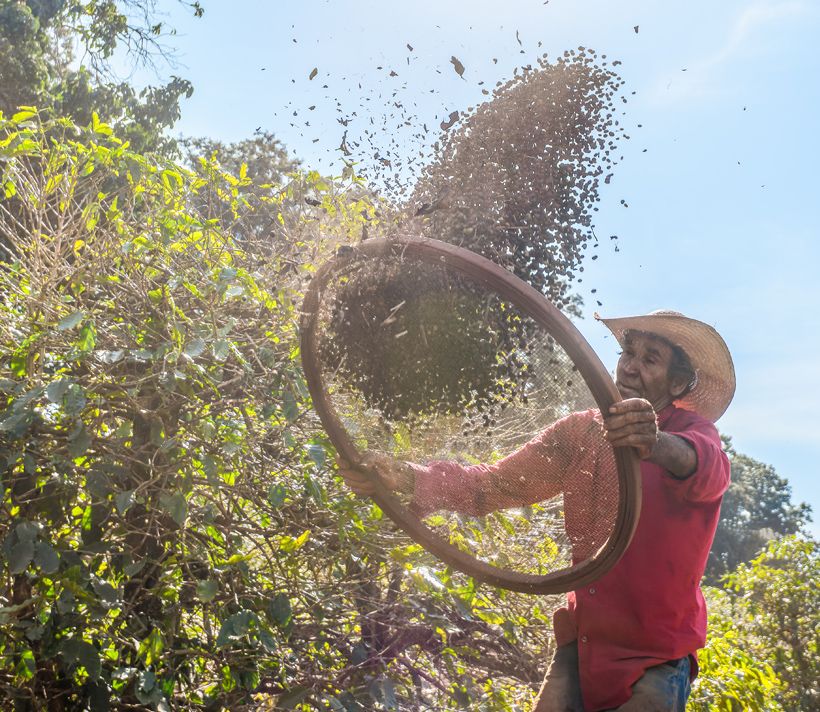
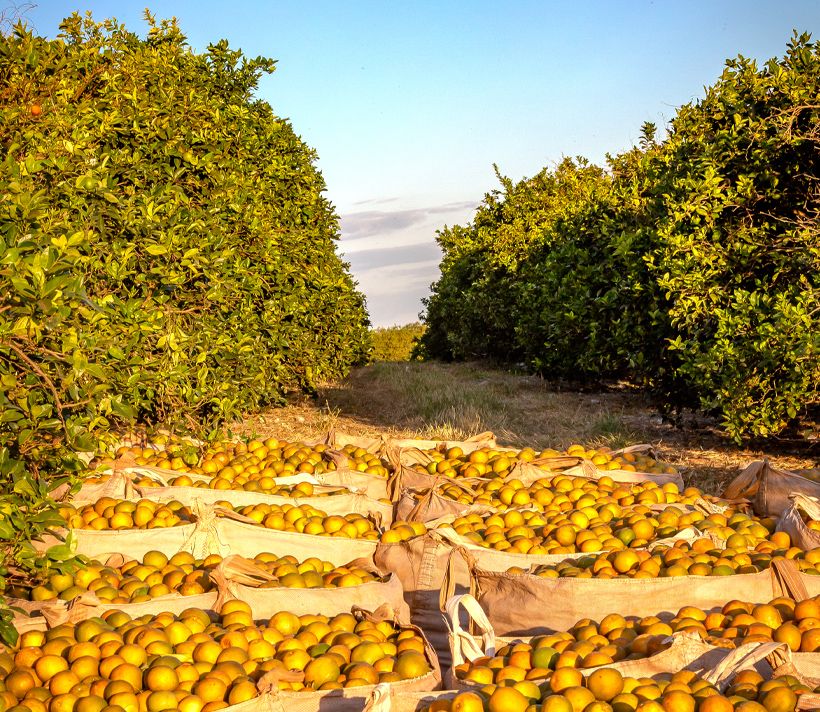
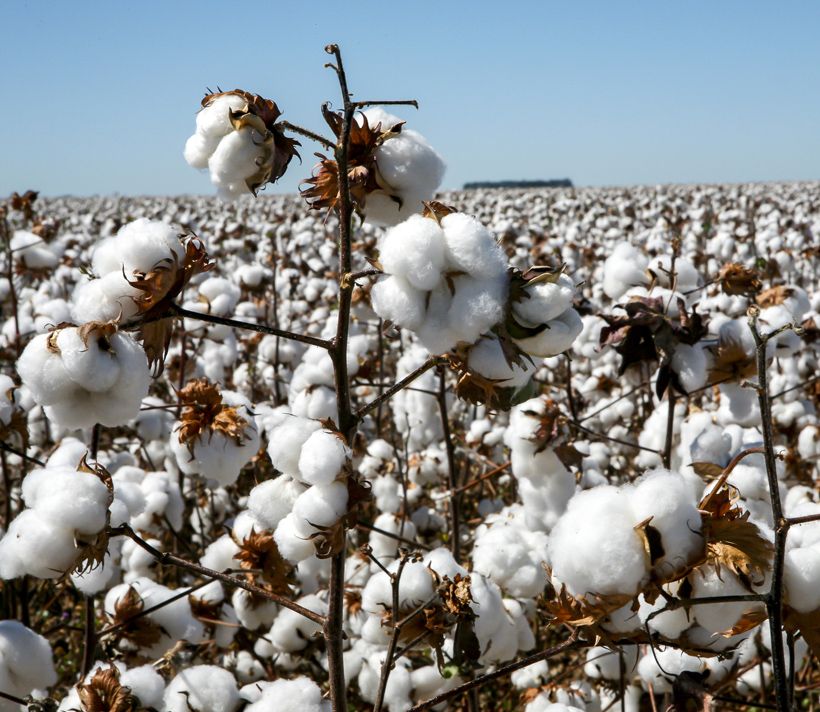
That cup of coffee you’re drinking? A one-in-three chance it’s Brazilian. The orange juice you enjoyed for breakfast? A 70 percent chance that the orange grew in Brazil. And as for that cotton shirt you pulled on this morning – well, there’s a one-in-five chance its cotton was farmed there.
But that’s not all. In 2025 Brazil ranked first in global exports of soybeans, sugar, poultry meat and beef, as well as coffee, orange juice and cotton. It’s not hyperbole to describe it as an agricultural powerhouse. After all, this is the fifth largest country in the world; the largest country in South America; the largest country in the Southern Hemisphere.
It’s how Brazil has taken advantage of its geographic attributes to reach this exalted position that is perhaps more impressive still. Just 50 years ago, Brazil was a net food importer, buying staple foods such as rice, beans, meat, corn and soybeans. Agricultural productivity was low, inflationary pressure was high, and food crises were a recurring issue.
Enter Embrapa
Founded in 1973, the Brazilian Agricultural Research Corporation – Embrapa – was set up as part of a government strategy to develop a new agricultural model for farming in a tropical climate. Not only would a revitalised agriculture ensure sufficient home-grown food for a growing population, but it would also help the country’s balance of payments through valuable export income.
The approach was simple. The fledgling state-owned agency recruited more than 2,000 researchers and experts, with a brief to travel the world: not to find technologies to import, but to find, absorb and collate the knowledge and understanding needed to practise and generate Brazilian-focused agricultural science.
Fifty-three years later, Embrapa’s success is regularly held up as an example of how state-led research can deliver true economic transformation. Thanks to Embrapa’s research-led technological innovation, today’s agriculture props up a full 25 percent of Brazil’s GDP. And last year, continued growth of 11 percent in agricultural productivity helped grow the overall economy by 2.3 percent.
It’s even more impressive to show those statistics from a field perspective. For example, grain production has increased by 510 percent since 1973. The country now produces 60 times more beef and chicken. And yet, despite all this increased productivity, agricultural land use has decreased. In fact, were the country still at its 1970s levels of productivity, Brazilian farmers would need to cultivate another 233 million hectares of land…to produce the same as they’re currently coaxing from just 180 million hectares.
Striking achievements
Unsurprisingly, Embrapa has become South America’s largest R&D organisation: 43 research units throughout the country, 150 research projects across 40 countries – including its famed ‘Labex’ virtual overseas laboratories, still researching and prospecting trends – and all supported by 8,000 employees, of whom 2,000 are full-time researchers.
That’s translated into 1,188 technologies, the breeding and commercialisation of over 2,000 crop cultivars, and the grant of 363 patents.
While the shift in Brazil’s agriculture that Embrapa has facilitated has been thorough and multi-factored, three achievements stood out.
First, it was after Embrapa’s research – its ‘know-how’, essentially – that the country managed to open up one of the world’s largest reserves of arable land. Known as the Cerrado, it’s the second biggest of Brazil’s six ‘biomes’ – a geographic area defined by its climate, soil and plant life. By interventions such as liming the soil to adjust its acidity and developing specific bacteria to help plants fix nitrogen without the use of fertiliser, the Cerrado now accounts for more than 60 percent of Brazilian agricultural production despite occupying less than a quarter of the country’s area.
Then there was the research into seed and crop development tailored to the tropics. Brazil became the world’s largest producer of soybeans only after careful breeding and the use of new technologies like genetic modification made it possible to grow a crop native to temperate East Asia in the much harsher tropical climate. Similarly, tropicalised cotton varieties provided farmers with higher yields of better quality fibre.
But the transformation in Brazilian agriculture has not just been about where and what farmers grow, but how they grow it, too. A third instrument in the success of Brazilian crop farmers has been their adoption of zero tillage practices, a system of planting crops that avoids excessive soil disturbance. Combined with effective crop rotations – not growing the same crop twice in succession – and cover crops that prevent soil erosion, zero tillage increases water infiltration into the soil and aids the retention of valuable organic matter. The net effect is healthier soils and lower production costs.
By helping farmers to understand and adopt these new techniques at scale, and – in the case of the Cerrado – encouraging experienced farmers to pioneer production in new areas, Brazil has transformed its agriculture. It doesn’t rest on its laurels, either. Achievements like those from Embrapa are supplemented constantly, whether that be the development of transgenic sugarcane (another crop for which Brazil takes first place as producer), pioneering work into agroforestry (combining arable or animal agriculture with trees), or the research and development of new biological pest control methods, as we saw with a visit to SPARCBIO, a 10-laboratory research centre combining public and private funding.
Powering growth
It’s fair to say that Perkins played a role in this agricultural development story. The company has supplied engines to power this transformation of Brazilian agriculture for more than 60 years, initially in the classic Massey Ferguson machines of the 1960s and 1970s, before manufacturers such as LS Tractor, Agrale and Landini brought their expertise to a receptive industry.
With hundreds of thousands of hectares coming into production, thanks to the work of Embrapa in areas like the Cerrado, demand for tractors began to grow at a pace that saw domestic production flourish. While imported Perkins engines met manufacturers’ requirements for reliability, ease of maintenance and customer satisfaction, 2003 saw the opening of the Curitiba manufacturing plant to supply not just tractors, but the full range of powered equipment, from sprayers to coffee, sugarcane and melon harvesters, that makes Brazilian agriculture the success it is.
Today, the Curitiba plant turns out thousands of engines a year. The popular and enduring 1100 Series powers machinery not just in agriculture but in construction, materials handling and electric power too. There’s also the 1106, in both mechanical and electronic forms, that finds favour thanks to its combination of technology, quality and the parts and service kits available from Curitiba’s Regional Logistics Centre.
Highly appropriate, then, to read the motto at the Curitiba plant: ‘Agribusiness is the engine of Brazil, and Perkins is the engine of Agribusiness’. It’s an enduring reminder of how the country has turned agriculture into its biggest export and an industry that feeds more than one billion people – and how agricultural success in any country is dependent on reliable power.
-
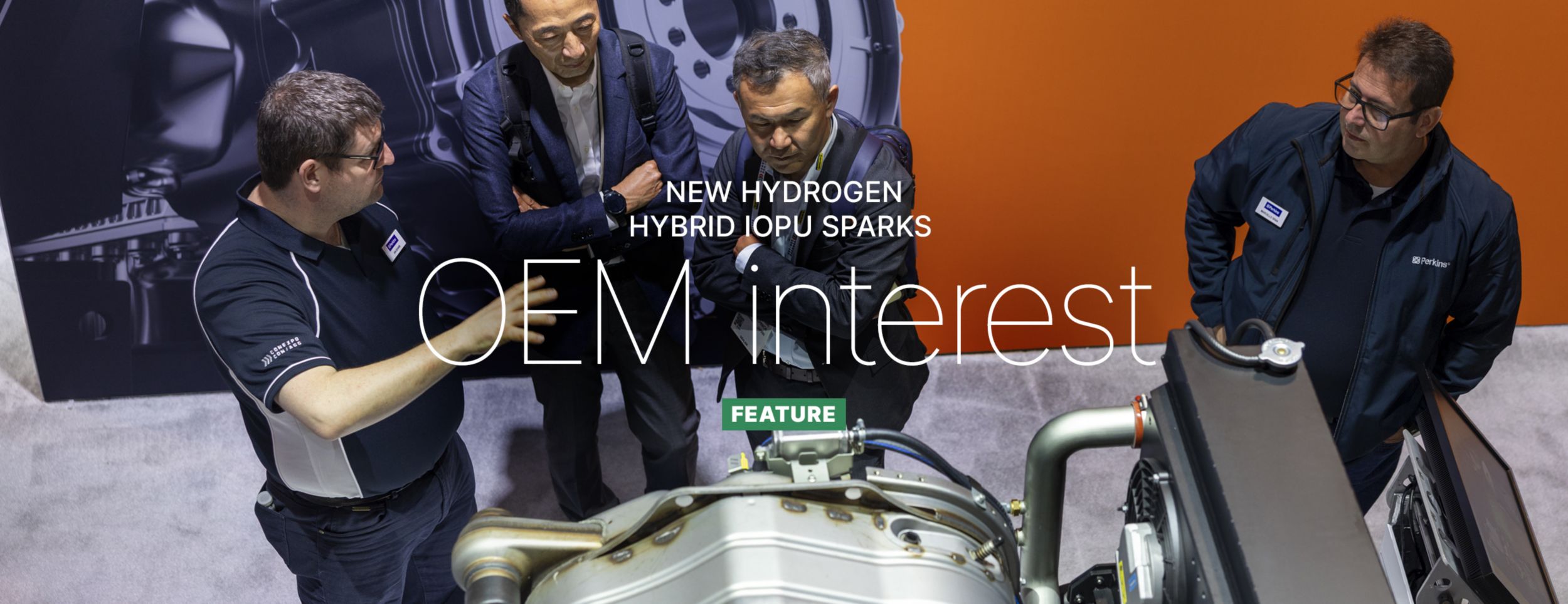
New hydrogen hybrid IOPU sparks OEM interest
CONEXPO-CON/AGG in March 2026 was the first showing of Perkins’ advanced fuel-configurable hybridised industrial open power unit (IOPU).
Read more -
The power of light towers
Behind the scenes at many global data centre development sites, stand a fleet of humble light towers, making 24/7 progress possible.
Read more -
Solving agricultural power needs
Facing an evolving energy landscape, Perkins is again applying its innovation to provide fresh power concepts.
Read more -
The future of off-highway power is about integration
We talk to Perkins vice president Richard Hemmings about our customer first approach.
Read more -
Powering ahead in marine
We investigate why customers return to Perkins time and again.
Read more -
Perkins® 904 Series: pushing the boundaries
The new model will deliver up to 129 kW (173 hp) and 740 Nm (546 lb ft) at 1500 rpm, from a compact 3.6 litre engine.
Read more -
High‑reliability power systems: The silent guardians ensuring data centre uptime
Ensuring uninterrupted performance is non-negotiable, at the heart of that reliability sits the diesel-powered generator.
Read more -
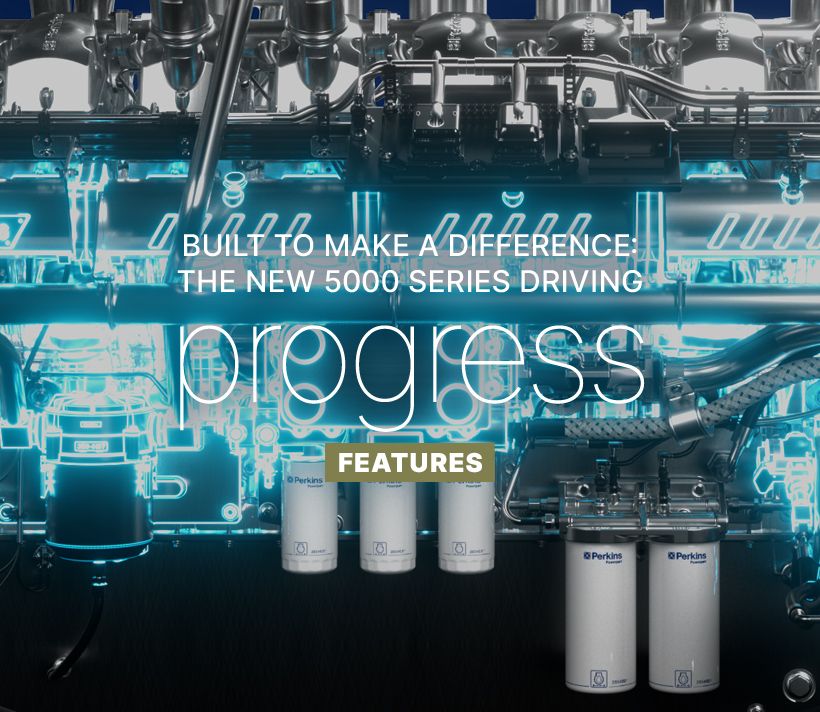
Built to make a difference: The new 5000 Series is driving progress around the world
Providing dependable power output up to 2500 kVA for standby and 2250 kVA for prime applications.
Read more -
Powering forward: Richard Hemmings on innovation, reliability and what comes next
Powernews caught up with new VP Richard Hemmings to learn more about his new role.
Read more -
A future full of momentum for Golden Arrow Marine
Building on a legacy of over 1000 Perkins engines supplied and 62 years of hands-on experience.
Read more








Also in this issue
-
Powering ahead in marine
We investigate why customers return to Perkins time and again.
Read more -
The power of light towers
Behind the scenes at many global data centre development sites, stand a fleet of humble light towers, making 24/7 progress possible.
Read more -
The future of off-highway power is about integration
We talk to Perkins vice president Richard Hemmings about our customer first approach.
Read more -
Solving agricultural power needs
Facing an evolving energy landscape, Perkins is again applying its innovation to provide fresh power concepts.
Read more -
New hydrogen hybrid IOPU sparks OEM interest
CONEXPO-CON/AGG in March 2026 was the first showing of Perkins’ advanced fuel-configurable hybridised industrial open power unit (IOPU).
Read more