

The future of off-highway power is about integration.
Today’s OEMs face growing complexity in powertrain decisions. Efficiency, uptime and reliability are key but there’s so much more to consider. Following our first interview with Richard Hemmings, Perkins new vice president and general manager for global sales, marketing, service and parts, (read part one) we’re catching up with him again to talk about our customer first approach.
The global off-highway equipment industry is no stranger to change. OEMs are left to grapple with a raft of complex pressures, such as criteria emissions regulations, cost control, uptime, fuel flexibility, electrification pathways and a growing diversity of end-user operating conditions.
For engine manufacturers, this shift has led them to take a broader view of power that spans diesel, hybrid and electric solutions, supported by engineering integration, digital tools and lifecycle services with the industry moving strongly toward practical outcomes.
What do OEMs expect now
“OEMs are focusing much more on driving efficiency, simplifying their product line-ups and minimising downtime,” says Richard. “That’s where the real value is being created.”
Around the world, OEM expectations are converging around a few core themes. Performance still matters, but it is no longer enough on its own. OEMs are looking to reduce complexity in both manufacturing and service by using common engine platforms across multiple machine types and regions.
“There’s a strong desire to use one engine family globally,” Richard explains. “It helps with inventory management and allows technicians to focus on a smaller number of platforms. That consistency becomes more valuable as machines and power systems get more sophisticated.”
At the same time, fuel flexibility is becoming an expectation. The ability to operate on alternatives such as hydrotreated vegetable oil (HVO) or biofuels can help OEMs and end users support efforts to adopt lower-carbon intensity fuels without changing equipment or infrastructure.
This approach reflects a broader industry preference for solutions that deliver sustainability benefits without operational disruption.
Mixed-power future
Despite rapid advances in electrification, diesel engines remain central to off-highway applications – particularly in construction, quarrying, mining and power generation. What is being seen, however, is a change in the way diesel technology is being developed and deployed.
“The jobsite of the future will have a mix of power solutions,” says Richard. “That mix will vary by region and application, and it will add complexity. But it doesn’t reduce the importance of diesel; if anything, it increases the focus on making diesel as efficient and productive as possible. That’s certainly our view at Perkins.”
Key areas of diesel innovation include increased power density, enabling OEMs to downsize engines without having to sacrifice performance, and technologies that reduce idle time and fuel consumption.
Connectivity and condition monitoring also play a growing role, helping operators understand how machines are used in the field and enabling proactive maintenance strategies.
Another area gaining attention is advanced control systems.
“Model-based control systems, which use a dynamic, physics-based algorithm to control the engine, are extremely beneficial for customers as the engine is continually optimising itself,” adds Richard.
“It means every end user gets a customised experience, with the engine adapting to the way it’s being used at that precise moment. It’s a more tailored, efficient experience without added complexity.”
Battery electric solutions
While diesel continues to evolve, OEMs are actively evaluating where battery electric solutions make sense – and where they don’t.
The challenge seems less about the technology itself and more about integration, cost and development time.
To help OEMs Perkins has developed a drop-in battery electric power unit, designed to replace a diesel engine within the existing machine architecture.
By matching mechanical connections and electrical interfaces, these systems allow OEMs to electrify platforms quickly, without undertaking costly ground-up redesigns.
“If OEMs can transition from diesel to electric using familiar interfaces and packaging, it helps reduce risk and accelerates decision-making,” Richard explains.
Demonstrator projects have shown that this approach can maintain performance while reducing development effort – an important consideration for OEMs managing limited engineering resources.
Hybrids can balance performance and efficiency
Hybrid powertrains are also re-emerging as a solution, particularly for applications where duty cycles, infrastructure or cost make full electrification difficult to implement. Also, rather than viewing hybrids as a transitional technology, many OEMs now see them as a way to balance performance, efficiency and flexibility over the long term.
“The technologies don’t have to compete,” Richard says. “They can complement each other. A hybridised diesel solution could, for example, meet performance and total cost of ownership (TCO) requirements in applications where electric-only simply isn’t practical.”
Recent development work has focused on hybrid systems capable of operating on multiple fuels, including lower-carbon and hydrogen-based options such as Project Coeus.
Digital tools are helping change engine design
Digitalisation is also influencing not just how engines are supported, but how they are designed.
“Telematics are providing more data on how engines are used in the field, which is impacting engine design to meet real world needs rather than perceived needs,” says Richard. “We can also see what failure modes have occurred in the field, so we can design to avoid those. We can now design out many issues as we have a better understanding of what caused them.”
For OEMs and end users alike, the economic impact can be significant, with the cost of a downed machine often outweighing any marginal difference in upfront price or peak performance.
“Connectivity and condition monitoring is revolutionising how customers connect, monitor and manage their equipment in real time. We’re empowering customers to take full control of their operations, so as they gain the insights and proactive support needed to maximise machine uptime and operate more efficiently,” adds Richard.
Customer Machine Engineering Team (CMET)
As power systems become more diverse, integration has become one of the biggest challenges facing OEMs.
Engineering resources are finite, and new product development is both time-consuming and costly.
This has increased demand for collaborative engineering support that goes beyond supplying an engine.
Richards explains that the Perkins Customer Machine Engineering Team (CMET) was established to address this gap. Drawing on significant accumulated experience, the team works directly with OEM engineers to integrate, optimise and validate power solutions – whether that involves replacing a competitor engine, hybridising an existing platform or testing alternative fuels.
“Sometimes customers engineering resources are limited,” says Richard. “The CMET service removes a significant burden and allows access to the expertise that the Perkins team can provide.”
CMET is one way Perkins has found to streamline the process of engineering a Perkins powertrain into OEM machines that leads to optimal system performance, ultimately meeting the needs of the end user.
Beyond this, Richard adds: “We are continuing to work closely with our OEMs to share our learnings and collaborate on new and exciting pilot projects.”
Stay tuned…
Part three of Richard’s interview will be published in the next quarterly issue of Powernews.
-
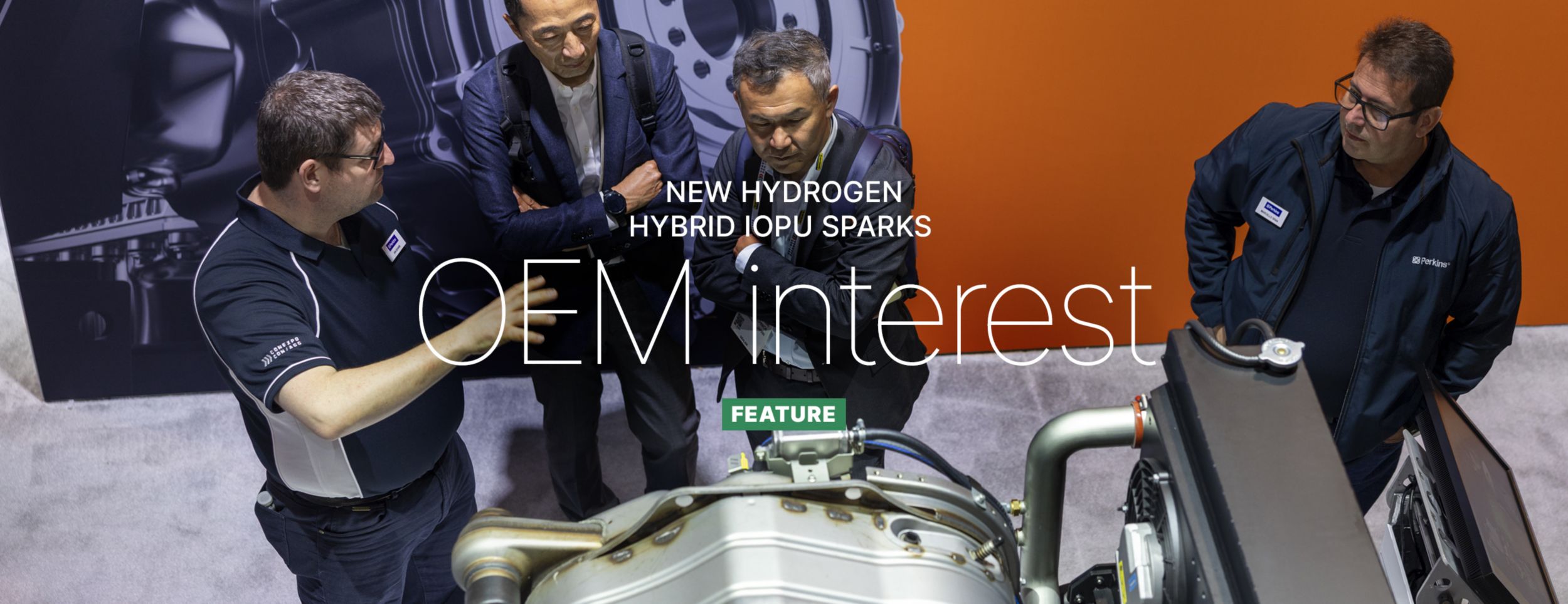
New hydrogen hybrid IOPU sparks OEM interest
CONEXPO-CON/AGG in March 2026 was the first showing of Perkins’ advanced fuel-configurable hybridised industrial open power unit (IOPU).
Read more -
The power of light towers
Behind the scenes at many global data centre development sites, stand a fleet of humble light towers, making 24/7 progress possible.
Read more -
Solving agricultural power needs
Facing an evolving energy landscape, Perkins is again applying its innovation to provide fresh power concepts.
Read more -
Raw agricultural power in Brazil
Powernews ag correspondent Adrian Bell gives us a snapshot of the impressive agricultural industry he observed – and its back story.
Read more -
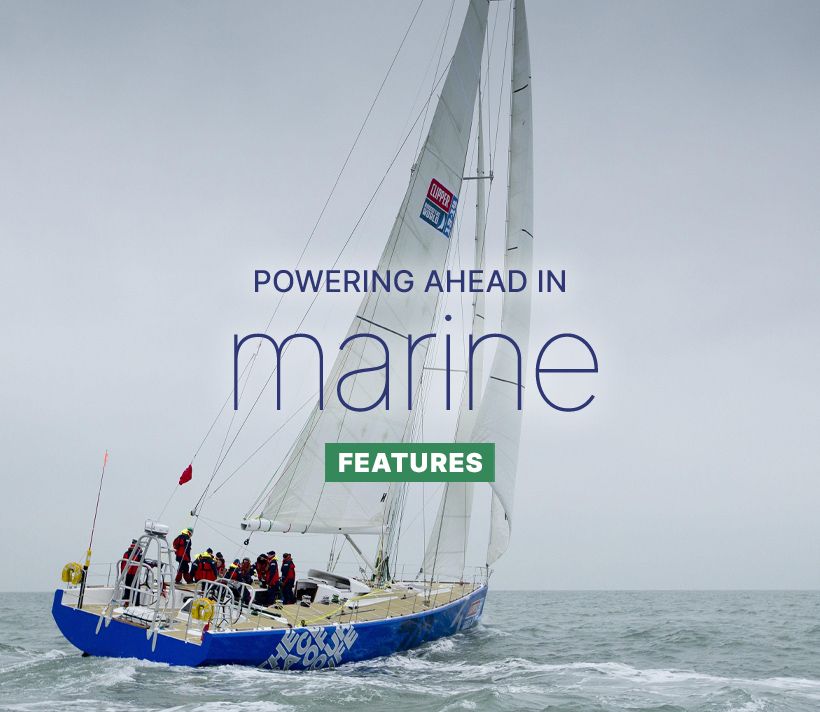
Powering ahead in marine
We investigate why customers return to Perkins time and again.
Read more -
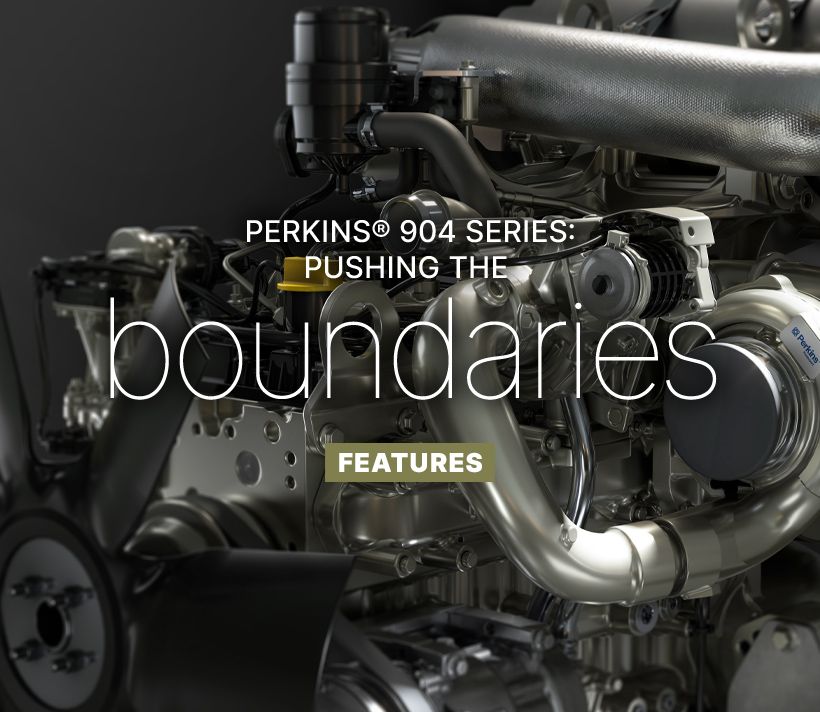
Perkins® 904 Series: pushing the boundaries
The new model will deliver up to 129 kW (173 hp) and 740 Nm (546 lb ft) at 1500 rpm, from a compact 3.6 litre engine.
Read more -
High‑reliability power systems: The silent guardians ensuring data centre uptime
Ensuring uninterrupted performance is non-negotiable, at the heart of that reliability sits the diesel-powered generator.
Read more -
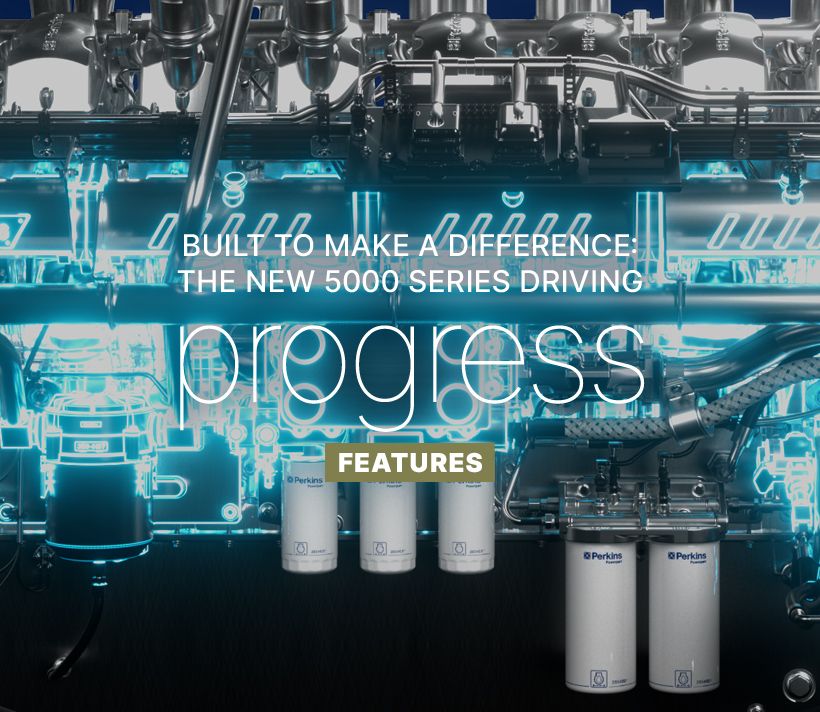
Built to make a difference: The new 5000 Series is driving progress around the world
Providing dependable power output up to 2500 kVA for standby and 2250 kVA for prime applications.
Read more -
Powering forward: Richard Hemmings on innovation, reliability and what comes next
Powernews caught up with new VP Richard Hemmings to learn more about his new role.
Read more -
A future full of momentum for Golden Arrow Marine
Building on a legacy of over 1000 Perkins engines supplied and 62 years of hands-on experience.
Read more






Also in this issue
-
Powering ahead in marine
We investigate why customers return to Perkins time and again.
Read more -
The power of light towers
Behind the scenes at many global data centre development sites, stand a fleet of humble light towers, making 24/7 progress possible.
Read more -
Solving agricultural power needs
Facing an evolving energy landscape, Perkins is again applying its innovation to provide fresh power concepts.
Read more -
Raw agricultural power in Brazil
Powernews ag correspondent Adrian Bell gives us a snapshot of the impressive agricultural industry he observed – and its back story.
Read more -
New hydrogen hybrid IOPU sparks OEM interest
CONEXPO-CON/AGG in March 2026 was the first showing of Perkins’ advanced fuel-configurable hybridised industrial open power unit (IOPU).
Read more