Rental owners need to move away from simply going with their gut and make more informed decisions on fleet management that are supported by hard data. That was the view of a recent article published on Rental Equipment Register (RER).
The piece highlights how rental inventory is a firm’s single largest investment. As a result, owners should treat their role like that of a stock portfolio manager, managing their fleet with care to ensure it delivers sufficient returns and keeps operations profitable.
Developing a successful fleet management strategy can be more straightforward than it seems. As a general rule of thumb, having a good-looking fleet, and not a tired one, really matters. If a fleet is in good condition, it’s more likely to be taken care of by customers and employees. This reduces repair and maintenance costs – and buoys your reputation.
Generally speaking, a fleet should have an average age of four to five years. In other words, half your fleet will be four to five years old or newer, and half of it older.
Rental businesses can maintain the current condition and average age of their fleets by reinvesting ten percent of the fleet’s original equipment cost (OEC) in new fleet purchases each year. While at the same time offloading ten percent.
This rule is known as maintenance capex. If you invest more, it’s called growth capex, which expands your fleet and revenue capacity.
The RER article gives the following tips for rental owners:

Put your rental software to good use
Use software to record and track data for each rental unit. This should include basic data on its brand, model, year and serial numbers, plus its acquisition date and original cost; financial data such as repair and maintenance costs, rental rates and revenue generated; and usage data such as time on rent and missed rentals.
Keeping reliable records and monitoring hard data will enable you to continually evaluate the rental fleet.

Sell smarter
The age of equipment shouldn’t be the only factor in influencing your decision to offload units from your fleet.
Your goal is to reduce the amount of under-performing assets in your fleet. This means drilling down on fleet data, first by category, then by unit. Highlight any troublesome or underperforming units, by looking out for red flags such as excessive repairs and maintenance, and low financial utilisation. Treat a single red flag like a warning sign. If you see two on a particular unit, it needs to go.

Make more educated purchases
Post-pandemic, construction prices could come under pressure. Companies should establish a central monitoring function that can rapidly identify and respond to resource-allocation needs across their entire portfolio. Organisations that have transparency across their portfolios are much better positioned to optimise sourcing and other needs.

Related Articles
-
![]()
Lendlease targets Net Zero Carbon
Lendlease’s plans for European construction sites feature in The Construction Index.
Learn more -
![]()
Vehicle telematics
IoT Business News reports on active off-highway vehicle telematics systems.
Learn more -
CES 2021
OEM Off-Highway reports on advanced technologies used in heavy equipment.
Learn more -
![]()
New era for backhoe loaders
The popularity of backhoe loaders continues writes ConExpo-Con/Agg 365 News.
Learn more -
![]()
Fuel management
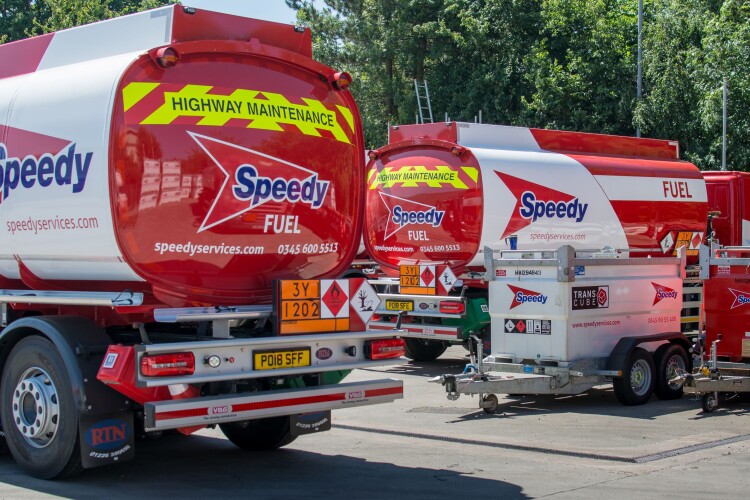
The Construction Index features hire chain Speedy’s investment in fuel management.
Learn more -
![]()
Equipment maintenance
ConExpo-Con/Agg 365 News reports on a United Rentals equipment maintenance webinar.
Learn more -
Switching to HVO
The Construction Index reports on T&M Bowser Solutions switching its tanker fleet to hydrotreated vegetable oil (HVO).
Learn more -
Bauma Date Change
Equipment World reports on next year's Bauma trade show in Germany being rescheduled to October 2022.
Learn more